
Anti-social driving

|
||
|
|
||
|
||
|
Anti-social driving |
||
|
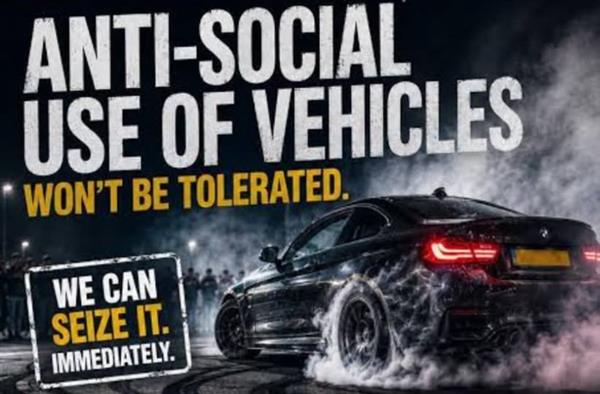
The way the police can deal with anti-social driving has recently changed. Previously drivers would usually receive a warning before their vehicle could be seized under Section 59 of the Police Reform Act 2002. That requirement has now been removed. This means the police can seize a vehicle on the first occasion if they reasonably believe it is being driven; - Carelessly or inconsiderately on road, public place, footpath, bridleway or byway OR - On common land, moorland, or any other land that is not part of a road without permission and is causing, or is likely to cause, alarm, distress or annoyance to members of the public Examples may include; - Dangerous driving at car meets - Wheel spins, excessive revving and burnouts - Riding off-road bikes where they're not permitted - Driving that intimidates or puts others at risk These changes give the police the ability to take swift action against those who choose to use their vehicles irresponsibly, helping to keep our communities safe.
| ||
Reply to this message | ||
|


|